
Introduction
In today’s digital-first world, businesses invest heavily in driving traffic to their websites through Digital Marketing Services like Search Engine Optimization (SEO), paid ads, social media, and email marketing. But here’s the catch—traffic alone doesn’t guarantee success. You might have thousands of visitors every month, yet if they’re not taking the desired actions—like signing up, buying a product, or booking a consultation—your marketing efforts won’t translate into tangible revenue. This is where Conversion Rate Optimization (CRO) steps in.
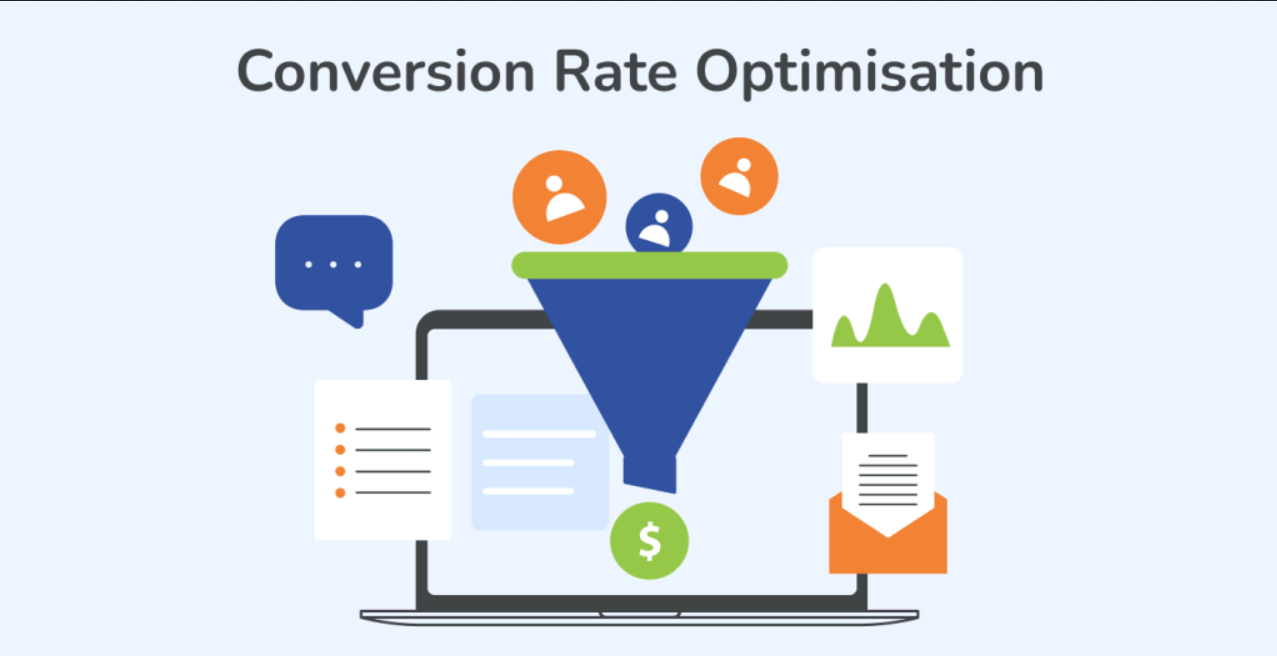
CRO is the systematic process of enhancing your website and digital touchpoints to encourage more visitors to take action. It’s not just about tweaking a button’s color or adding a flashy pop-up—it’s about deeply understanding user behavior, removing friction, and creating an experience that guides your audience seamlessly from curiosity to commitment. When done right, CRO doesn’t just improve conversions; it directly boosts your revenue, customer lifetime value, and overall return on investment (ROI).
Think of it this way: if your website attracts 10,000 visitors each month with a 2% conversion rate, you’ll generate 200 leads or sales. But if you optimize and raise that conversion rate to 4%, you’ll double your results—without spending a single extra dollar on acquiring new traffic. That’s the true power of CRO—it maximizes what you already have.
Moreover, CRO aligns perfectly with today’s customer expectations. Modern consumers are impatient, discerning, and spoiled with options. They won’t waste time on a confusing website, unclear offer, or sluggish checkout process. They want a smooth, intuitive journey, and businesses that prioritize CRO—while leveraging Digital Marketing Services such as Search Engine Optimization—are the ones who stand out in crowded markets.
In this guide, we’ll walk through a step-by-step approach to building a CRO strategy that not only improves conversions but also drives real business growth. From understanding your audience and setting clear KPIs to leveraging tools, testing strategies, and adopting best practices, you’ll learn how to turn passive visitors into active, paying customers.
Understanding CRO
Before diving into the practical steps of building a strategy, it’s important to fully understand what Conversion Rate Optimization really is and how it works. Many businesses mistake CRO for a quick-fix tactic—like changing a button color or adding a discount banner—but in reality, it’s a much deeper and structured process that integrates data, psychology, and user experience to drive better business outcomes.
What is Conversion Rate Optimization (CRO)?
At its core, CRO is the practice of increasing the percentage of website visitors who complete a desired action. These actions can vary depending on your business goals:
- For an e-commerce store, it may mean purchases or add-to-cart actions.
- For a B2B company, it could be filling out a lead form or requesting a demo.
- For a SaaS business, it might be free trial sign-ups or subscription upgrades.
Essentially, CRO ensures that the visitors you’ve worked so hard to attract are not just leaving without engaging—they’re moving closer to becoming paying customers.
CRO vs. SEO vs. UX: How They Interconnect
It’s easy to confuse CRO with other digital strategies like SEO (Search Engine Optimization) and UX (User Experience). While all three overlap, they serve different purposes:
- SEO brings traffic to your site by improving visibility on search engines.
- UX ensures visitors enjoy a smooth, intuitive, and frustration-free experience.
- CRO focuses on turning that traffic into conversions and, ultimately, revenue.
A strong digital growth strategy combines all three. Driving traffic without CRO means you’re filling a leaky bucket—people come, but they don’t convert. Investing in CRO without SEO means you’ll optimize for too few visitors. And ignoring UX will leave your customers frustrated, undoing any CRO efforts.
Core Principles of CRO
- Successful CRO strategies are built on a few key principles:
- Data-Driven Decision Making – CRO isn’t about guesswork. It’s about analyzing actual user behavior, running tests, and basing changes on evidence.
- User-Centricity – The end goal is always to make things easier and more persuasive for your customers. If they win, you win.
- Continuous Improvement – CRO is not a one-time project. Consumer behavior evolves, competitors innovate, and technologies change. Optimization must be ongoing.
- Alignment with Business Goals – A CRO test should not just improve click-throughs—it should tie back to revenue, customer lifetime value, and overall ROI.
Common Misconceptions About CRO
Despite its importance, CRO is often misunderstood. Let’s clear up some of the biggest myths:
- Myth 1: CRO is only about A/B testing. While A/B tests are a critical tool, CRO encompasses user research, data analysis, funnel optimization, and more.
- Myth 2: CRO delivers instant results. Unlike paid ads, CRO often requires multiple rounds of testing and analysis before significant improvements are seen.
- Myth 3: CRO is optional. In competitive markets, CRO is not a “nice-to-have”—it’s a necessity. Without it, businesses waste money on traffic acquisition without converting enough to justify the spend.
Why CRO Matters More Than Ever
Today’s online environment is saturated. Customers have unlimited options and short attention spans. Businesses can’t afford to let even a fraction of traffic go to waste. CRO provides a way to make every marketing dollar stretch further by improving efficiency. In other words, rather than paying more to get more visitors, you make your existing traffic work harder for you.
When you understand CRO as a systematic, customer-focused, and revenue-driven process, you start to see why it’s a cornerstone of modern digital marketing.
The Business Case for CRO
If you’re still wondering why Conversion Rate Optimization (CRO) deserves a dedicated spot in your marketing strategy, here’s the truth: CRO is one of the most cost-effective, sustainable, and high-return investments you can make in your business. While businesses often pour huge budgets into driving traffic through advertising and SEO, CRO ensures that traffic doesn’t go to waste. It’s the difference between filling a bucket with holes and sealing those leaks so every drop counts.
Why CRO is Critical for Business Growth
At its simplest, CRO boosts the efficiency of your digital presence. You’re already spending resources—time, money, or effort—on bringing people to your website. Without optimization, a majority of those visitors may bounce away without converting. CRO flips that scenario by helping you capture more value from the same audience.
Let’s put this into perspective:
- Suppose you run an e-commerce store with 10,000 monthly visitors and a conversion rate of 2%. That gives you 200 sales.
- If the average order value is $50, your monthly revenue is $10,000.
- Now imagine you improve your conversion rate to 4% with CRO. Without adding a single new visitor, your sales double to 400 and your revenue to $20,000.
That’s the power of optimization—it multiplies results without multiplying costs.
CRO vs. Traffic Acquisition: Which Delivers More ROI?
Businesses often face the dilemma of whether to invest in acquiring more traffic or optimizing existing traffic. While both are essential, traffic acquisition without CRO can be incredibly wasteful.
- Traffic Acquisition ROI: Paid ads, for instance, have rising costs due to competitive bidding. Bringing in more traffic requires ongoing investment.
- CRO ROI: Once you improve your conversion processes, those improvements continue to pay off over time, even with the same traffic volume.
CRO complements acquisition by making sure every click and every visitor has the highest chance of converting into revenue.
Tangible Benefits of CRO
Beyond pure revenue, CRO delivers a wide range of benefits that ripple across your business:
- Lower Customer Acquisition Cost (CAC) – By converting more visitors into customers, you reduce the cost of acquiring each one.
- Increased Customer Lifetime Value (CLV) – Optimized onboarding, upsells, and retention strategies ensure customers spend more over time.
- Better User Experience (UX) – CRO often involves simplifying navigation, improving design, and reducing friction—making your site more enjoyable.
- Stronger Competitive Advantage – In industries where everyone fights for the same audience, a higher conversion rate means you win more customers with the same traffic.
- Scalable Growth – Once your conversion funnel is optimized, scaling traffic through SEO, ads, or social campaigns becomes far more profitable.
Real-World Examples of CRO in Action
- E-commerce Example: A fashion retailer introduced product videos and improved product descriptions. Conversions rose by 35% in three months, translating into millions in revenue.
- SaaS Example: A software company streamlined its trial sign-up process, reducing form fields from 10 to 4. The result? A 60% increase in trial sign-ups.
- B2B Example: A consulting firm added social proof—client testimonials, case studies, and industry awards—on its landing pages, boosting lead submissions by 40%.
These examples show that CRO isn’t limited to one industry. Whether you’re selling physical products, software, or services, small optimizations compound into big business results.
The Bottom Line
CRO is not just about percentages—it’s about profits. By building a structured CRO strategy, you’re not only improving conversion rates but also maximizing every marketing dollar, strengthening customer relationships, and positioning your business for sustainable growth.
When you consider that most websites convert only 2–3% of visitors, the upside potential is enormous. Even a modest increase can translate into exponential revenue growth, making CRO one of the smartest investments a business can make today.
Key Elements of an Effective CRO Strategy
Building a high-performing CRO strategy isn’t about random tweaks or copying what competitors do. It requires a deliberate framework that blends psychology, design, technology, and data to remove barriers and encourage action. Below are the core elements that make up an effective CRO strategy.
1. Audience Research & Buyer Personas
You can’t optimize conversions without first understanding who you’re trying to convert. CRO begins with deep audience research that goes beyond demographics and dives into motivations, pain points, and behaviors.
- Demographic Insights: Age, gender, location, income, and occupation.
- Psychographic Insights: Values, aspirations, fears, and objections.
- Behavioral Insights: Browsing habits, preferred devices, purchasing triggers.
By combining these insights, you can create buyer personas—fictional yet data-driven profiles of your ideal customers. These personas act as guiding lights for your CRO strategy, ensuring every design choice, piece of content, and CTA speaks directly to the people most likely to convert.
Example: If your target audience is busy professionals, your CRO focus might be on speed (fewer steps, quick checkout) and trust signals (secure payments, strong guarantees).
2. Website Usability & UX Design
A friction-filled website is the fastest way to lose potential customers. Usability and user experience (UX) form the backbone of CRO. Even if your offer is irresistible, poor design or confusing navigation will discourage conversions.
Key UX factors that affect CRO include:
- Navigation Simplicity – Visitors should find what they’re looking for in 2–3 clicks.
- Mobile Optimization – With mobile traffic dominating, responsive design is non-negotiable.
- Page Speed – Every extra second of load time can reduce conversions by up to 7%.
- Visual Hierarchy – Use clear headings, whitespace, and color contrast to guide attention.
The smoother the journey, the easier it is for visitors to say yes.
3. Persuasive Copywriting
Your words can make or break conversions. CRO copywriting isn’t about stuffing keywords—it’s about addressing user intent and leading them toward action.
Effective CRO copy should:
- Focus on Benefits, Not Just Features – Instead of saying “Our app has 5 GB storage,” say “Store thousands of photos without running out of space.”
- Use Emotional Triggers – Tap into urgency, security, or aspiration.
- Be Concise & Scannable – Break down text into short sentences, bullets, and bold highlights.
- Speak Directly to the Reader – Use “you” to make it personal.
4. Strong & Strategic CTAs (Call-to-Actions)
The Call-to-Action is where conversions happen. A vague or poorly placed CTA can cost you leads and sales.
Best practices for CTAs include:
- Clarity: Use action words like “Get Started,” “Book My Demo,” or “Claim Your Offer.”
- Contrast: Buttons should stand out visually against the background.
- Placement: Place CTAs above the fold, at the end of content, and within logical flow points.
- Testing: Try variations in color, text, and positioning to find what resonates best.
5. Trust Signals & Social Proof
People buy from businesses they trust. Without credibility, even high-traffic websites struggle to convert. CRO leverages trust-building elements to reassure visitors.
Types of trust signals include:
- Customer Testimonials & Reviews – Genuine stories from past buyers.
- Case Studies – Proof of measurable results for real clients.
- Security Badges – SSL certificates, payment protection icons.
- Media Mentions & Awards – Third-party validation that boosts credibility.
- Money-Back Guarantees – Lowering risk increases conversions.
6. Data & Analytics Integration
CRO is powered by numbers. Without data, you’re guessing. A robust CRO strategy integrates analytics to identify patterns and opportunities.
Essential metrics to monitor include:
- Conversion Rate (overall and per funnel step)
- Bounce Rate & Exit Rate
- Average Session Duration
- Cart Abandonment Rate
- Cost per Conversion
Beyond Google Analytics, tools like Hotjar, Crazy Egg, or Microsoft Clarity provide heatmaps and session recordings that uncover why users act the way they do.
7. Personalization & Segmentation
One-size-fits-all websites rarely perform well. Personalization ensures the right message reaches the right visitor at the right time.
Examples:
- Showing returning visitors a “Welcome Back” message.
- Offering first-time buyers a discount.
- Tailoring CTAs based on traffic source (e.g., social media vs. email).
Segmentation—dividing audiences by behavior or demographics—makes personalization scalable.
8. Continuous Testing & Iteration
CRO is never “done.” User expectations change, technology evolves, and competitors innovate. That’s why continuous testing is essential.
Types of tests:
- A/B Testing – Comparing two versions of a page element.
- Multivariate Testing – Testing multiple combinations of elements.
- Split URL Testing – Testing different page designs entirely.
The key is to adopt a scientific mindset: form a hypothesis, test it, analyze results, and refine.
Putting It All Together
An effective CRO strategy isn’t built on guesswork—it’s built on understanding your audience, delivering seamless UX, writing persuasive copy, placing strategic CTAs, building trust, analyzing data, personalizing experiences, and continuously testing improvements.
When all these elements align, your website becomes more than a digital storefront—it becomes a conversion engine that fuels growth.
5. Step-by-Step Guide to Building a CRO Strategy
Now that we’ve covered the foundations, let’s dive into the exact steps you need to build a Conversion Rate Optimization strategy that consistently boosts revenue.
Step 1: Conduct a Website Audit
Every CRO journey begins with understanding the current state of your website. Think of it as a “health check” to identify what’s working and what’s not.
Key areas to review:
- Site speed: Slow pages kill conversions.
- Navigation: Can users find what they need in 3 clicks or less?
- Mobile-friendliness: With over 60% of web traffic coming from mobile, responsiveness is non-negotiable.
- Conversion funnels: Are visitors dropping off before completing actions?
Step 2: Define Clear Goals & KPIs
Without clear goals, CRO efforts lack direction. Start by identifying your primary conversion goals—these are the core actions you want visitors to take.
Examples:
- E-commerce: product purchases, upsells, repeat orders.
- SaaS: free trial sign-ups, demo bookings, paid upgrades.
- Service-based: contact form submissions, phone calls, consultations.
Then, define Key Performance Indicators (KPIs) to measure progress, such as:
- Conversion rate
- Cost per conversion
- Revenue per visitor
- Average order value
Step 3: Analyze User Behavior
To optimize conversions, you need to know how users interact with your site. This requires combining quantitative data (numbers) and qualitative data (user feedback).
- Heatmaps: Show where users click, scroll, or get stuck.
- Session Recordings: Reveal real visitor journeys.
- On-site Surveys: Ask users what prevented them from converting.
- Analytics: Identify high-bounce pages and drop-off points.
Step 4: Funnel Analysis & Identifying Drop-offs
Every conversion journey is a funnel—awareness, interest, consideration, decision. Your job is to figure out where visitors leak out.
- Top of Funnel (Awareness): Are your landing pages clear?
- Middle of Funnel (Consideration): Do you provide enough information (case studies, product details, reviews)?
- Bottom of Funnel (Decision): Is checkout or form submission friction-free?
Step 5: Create Hypotheses
Based on your research, build testable hypotheses. A good CRO hypothesis follows this structure:
“If [change], then [expected result], because [reason].”
Examples:
- If we simplify the sign-up form from 8 fields to 3, then more users will complete registration, because fewer steps reduce friction.
- If we add testimonials near the CTA, then conversions will increase, because social proof reduces hesitation.
Step 6: A/B Testing & Multivariate Testing
Testing is the heart of CRO. Instead of relying on assumptions, you experiment with variations to see what works.
- A/B Testing: Compare two versions of a single element (e.g., CTA color, headline).
- Multivariate Testing: Test multiple changes at once to see which combination performs best.
- Split Testing: Compare entirely different page designs.
Best practices:
- Test one major variable at a time.
- Run tests long enough to gather statistically significant data.
- Don’t declare winners too early—seasonality and traffic volume affect results.
Step 7: Implement Improvements
Once a variation proves successful, implement it fully. But don’t stop there—optimization is iterative. Apply the learnings across similar pages and touchpoints.
For example, if a testimonial placement improves conversions on a landing page, consider adding testimonials to product pages, checkout flows, and lead forms.
Step 8: Continuous Monitoring & Iteration
CRO isn’t a one-and-done task. Consumer preferences, technology, and competitors change over time. The most successful businesses treat CRO as an ongoing cycle:
Research →
Hypothesize →
Test →
Implement →
Analyze →
Repeat.
By embracing continuous improvement, your website evolves alongside your customers, ensuring long-term revenue growth.
6. CRO Tools & Technologies
The right tools make CRO execution more effective. Here’s a breakdown of popular categories and platforms:
- Analytics Tools: Google Analytics, Mixpanel (for traffic & user flow insights).
- Heatmaps & Recordings: Hotjar, Crazy Egg, Microsoft Clarity.
- A/B Testing Tools: Optimizely, VWO, Google Optimize.
- Form Analytics: Zuko, Formisimo (to track where users drop off).
- CRM & Marketing Automation: HubSpot, ActiveCampaign (to nurture leads post-conversion).
Pro tip: Don’t overload on tools. Choose a stack that aligns with your traffic volume, budget, and goals.
7. Best Practices for Higher Conversions
Some universal CRO best practices include:
- Mobile-first optimization (most traffic is mobile).
- Page speed improvements (compress images, use CDNs).
- Personalization (dynamic content based on location, device, or behavior).
- Psychological triggers (scarcity: “Only 3 left!”, urgency: “Offer ends today!”).
- Landing page optimization (single-focused CTAs, minimal distractions).
Case example: Amazon leverages urgency (“Order within 2 hours to get it tomorrow”) to drive faster decisions.
8. CRO Mistakes to Avoid
Even smart businesses make CRO mistakes:
- Testing without data – Random changes waste resources.
- Ignoring mobile users – Mobile-first is no longer optional.
- Overcomplicating forms – Long forms drive drop-offs.
- Copying competitors blindly – What works for them may not work for you.
- Stopping after one win – CRO is about consistent iteration.
9. Case Studies & Real-World Examples
E-commerce Case: An online shoe retailer reduced checkout steps from 5 to 3 → +25% conversions.
SaaS Case: A project management tool added interactive product tours → +40% free trial sign-ups.
Service Business Case: A law firm introduced live chat for faster queries → +60% consultation bookings.
These prove CRO works across industries.
10. Future Trends in CRO
CRO is evolving rapidly with technology. Key trends include:
- AI & Machine Learning – Predicting user behavior and automating personalization.
- Conversational Interfaces – Chatbots and voice search shaping conversion paths.
- Hyper-personalization – Dynamic CTAs, pricing, and offers tailored per visitor.
- Experience-focused CRO – Moving from “conversions only” to full customer journey optimization.
Businesses that adopt these trends early will stay ahead of the competition.
11. Conclusion
In the fast-paced digital world, simply attracting traffic to your website is no longer enough. To truly maximize business growth, you need to focus on turning that traffic into loyal customers—and that’s where Conversion Rate Optimization (CRO) shines.
By now, you’ve seen how CRO goes far beyond button colors and layout tweaks. It’s a systematic approach that involves understanding your audience, creating frictionless user experiences, writing persuasive copy, testing every assumption, and continuously refining your digital presence. Whether you’re an e-commerce brand, SaaS provider, or service-based business, CRO ensures every visitor is given the best possible chance to convert.
The beauty of CRO lies in its compounding impact. Small improvements in conversion rates—whether 1%, 2%, or 5%—can translate into massive revenue gains when multiplied across thousands of visitors. Even better, CRO complements your other marketing efforts, ensuring that the money you spend on ads, SEO, and content marketing delivers the highest possible return.
Most importantly, CRO is not a one-time fix. Consumer behavior changes, competitors adapt, and technologies evolve. Businesses that adopt CRO as a continuous process, rather than a single project, stay ahead of the curve and enjoy sustainable long-term growth.
If you’re ready to take your website beyond traffic numbers and into real, measurable revenue growth, now is the time to implement a robust CRO strategy. Start small, test often, learn from the data, and remember—the key to CRO success is not perfection, but progression.