
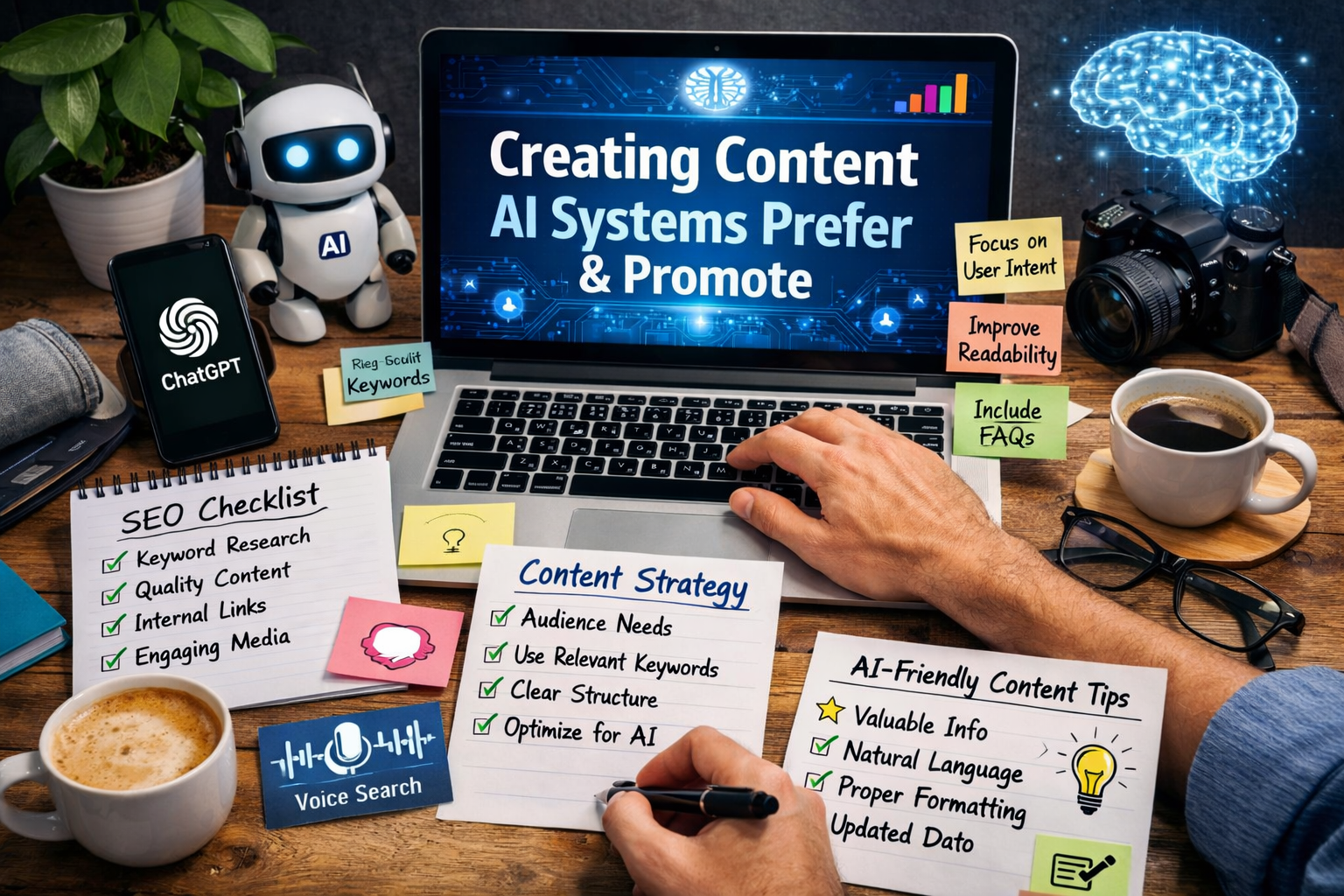
The digital landscape has undergone one of the most significant transformations in the history of online marketing. Artificial intelligence is no longer a background tool quietly sorting search results — it is now the primary gatekeeper deciding which content gets discovered, amplified, and trusted by millions of users every single day. Search engines, social media platforms, content recommendation engines, and even email algorithms have all evolved to use sophisticated AI models that evaluate content with a level of nuance that was simply impossible just a few years ago.
For businesses, content creators, and marketers, this shift represents both a challenge and an extraordinary opportunity. The challenge is that old playbooks — built on keyword density, link schemes, and volume-over-quality publishing — are now actively penalized by these intelligent systems. The opportunity is that brands willing to invest in genuinely high-quality, strategically structured content now have an unprecedented ability to stand out in a crowded digital world.
At Illumin8 Digital Marketing, we have dedicated ourselves to understanding precisely how AI systems think, what signals they prioritize, and what content behaviors they reward. This article is the result of that research — a comprehensive, practical guide for anyone who wants to design content that AI systems not only accept but actively prefer and promote. Whether you are a small business owner writing your own blog, a marketing manager overseeing a content team, or a brand looking to dominate your niche online, this guide will give you the framework, the tactics, and the mindset you need to succeed in the age of AI-driven content discovery.
The rules have changed. Let’s make sure your content is ready.
1: Understanding How AI Systems Evaluate Content
What AI Is Really Looking For in Your Content
Before you can design content that AI systems prefer, you need to develop a clear and honest understanding of what these systems are actually evaluating when they encounter your content. Many marketers still operate under the assumption that AI ranking systems are primarily keyword-matching tools — sophisticated ones, perhaps, but fundamentally looking for the right words in the right places. This assumption is dangerously outdated and is costing brands enormous amounts of visibility, traffic, and revenue every single day.
Modern AI systems, including Google’s Search Generative Experience, social media ranking algorithms on platforms like Instagram, LinkedIn, and YouTube, and content recommendation engines like those powering news aggregators and streaming platforms, have all moved far beyond simple keyword analysis. These systems are now trained on vast datasets of human behavior, expert content, and quality signals that allow them to evaluate content much the way a highly educated, experienced human reader would. They are asking questions that go deep into the substance and intent of your content.
Is this content genuinely addressing the user’s question, or is it dancing around the topic without delivering real value? Does the author demonstrate actual knowledge and real-world experience, or does this read like it was assembled from surface-level research? Is the information presented in a logical, coherent structure that makes it easy for a reader to follow and apply? Does the content leave the user satisfied, or does it create more questions than it answers? These are the evaluations happening in fractions of a second every time an AI system encounters your content.
Why Old SEO Tactics Now Work Against You
Understanding this shift is critical because it reframes the entire content creation process. Tactics that once produced results — keyword stuffing, thin content padded with filler paragraphs, clickbait headlines that overpromise and underdeliver, content spun from other articles without original insight — no longer simply fail to work. They actively signal to AI systems that your content is low quality and should be suppressed in favor of better alternatives.
Google’s Helpful Content System, which has been significantly strengthened in recent algorithm updates, is specifically designed to identify and demote content that exists primarily to rank rather than to genuinely help users. Social media algorithms on every major platform have similarly evolved to detect and reduce the reach of content that generates passive impressions without meaningful engagement. When users scroll past your content without clicking, read your article and immediately return to search results, or watch your video for only a few seconds before leaving, all of these behaviors are captured as negative quality signals by AI systems.
The brands and creators that are thriving in this environment are those who have fundamentally reoriented their content strategy around a single question: does this piece of content make the user’s life measurably better in some way? When that is your guiding principle, and when it is executed with genuine skill and strategic structure, AI systems become your most powerful distribution partner rather than an obstacle to overcome. At Illumin8 Digital Marketing, this philosophy is the foundation of everything we build for our clients.
2: Leading With Genuine Expertise and Experience
Why Authentic Expertise Is Now Your Most Valuable Content Asset
In an era where anyone can generate a 2,000-word article on any topic in minutes using AI writing tools, genuine expertise has become the rarest and most valuable commodity in the content landscape. AI ranking systems have evolved specifically to identify and reward content that reflects real knowledge, real experience, and real authority — because that is precisely what users need and what builds long-term trust in a platform’s recommendations.
Google’s E-E-A-T framework, which stands for Experience, Expertise, Authoritativeness, and Trustworthiness, is now deeply embedded in how AI evaluates content across every category. The addition of the first “E” for Experience is particularly significant. It signals that Google is no longer satisfied with credentials alone — the system wants to see evidence that the person or brand behind the content has actually done the thing they are writing about. A personal injury lawyer writing about legal strategy, a professional chef sharing cooking techniques, a digital marketing agency explaining SEO tactics from real campaign results — this is the kind of experiential authority that AI systems are designed to identify and elevate.
How to Demonstrate Expertise in Every Piece of Content
Demonstrating expertise in your content is not simply about adding a credentials to your author bio, although that matters too. It is about weaving real knowledge and genuine insight into every paragraph you write. This means sharing specific results from actual projects rather than speaking in generalities. It means acknowledging nuance and complexity rather than oversimplifying topics to make them easier to write about. It means respectfully disagreeing with conventional wisdom when your experience has taught you something different, and providing the evidence to back that position up.
Case studies are one of the most powerful tools for demonstrating experiential authority. When you can show a reader exactly what you did, what happened as a result, what challenges arose along the way, and what you would do differently next time, you are providing the kind of specific, grounded insight that no amount of research can fully replicate. At Illumin8 Digital Marketing, we incorporate real client results and campaign data into our content wherever possible, because we know that specificity is the signature of genuine expertise.
Author bios, credentials, links to published work, professional profiles, and even photography all contribute to AI systems’ assessment of your authority. Content that can be traced back to a real, credentialed, active professional in a given field will consistently outperform anonymous or poorly attributed content on the same topic. Build your author presence as deliberately as you build your content.
3: Structuring Your Content for AI Readability
The Architecture of AI-Friendly Content
If expertise is the soul of great content, structure is its skeleton. AI systems do not simply read your content the way a human does, beginning at the top and moving linearly to the bottom. They parse, categorize, and extract meaning from the way your content is organized, using structural signals to understand what your content is about, who it is for, what questions it answers, and how it should be classified and served. Getting your structure right is not a cosmetic exercise — it is a fundamental requirement for AI visibility.
The most effective AI-friendly content architecture begins with clarity at every level. Your H1 heading should clearly and specifically describe what the entire piece covers, without being clever at the expense of being clear. Your H2 subheadings should map the major s of your content in a way that could almost serve as a standalone outline for the reader. Your H3 and H4 headings should break those s into digestible, specific subtopics that address individual questions or aspects of the broader theme. This hierarchical structure allows AI systems to understand the scope and depth of your content with precision.
Paragraph Length, Formatting, and Flow
Beyond headings, the way you construct individual paragraphs and format your content has a direct impact on AI readability and user experience simultaneously. Short, purposeful paragraphs of three to five sentences perform better than dense walls of text because they are easier for both human readers and AI parsing systems to process. Each paragraph should have a clear focus, advancing the argument or explanation in a specific direction rather than trying to cover multiple unrelated points in the same block of text.
Lists and tables are particularly valuable formatting tools in the context of AI-preferred content. When you present information in a bulleted or numbered list, you are organizing data in a format that AI systems can easily extract and display in featured snippets, AI overviews, and other high-visibility placements. Comparative information presented in tables is similarly structured for AI extraction and is frequently pulled into Google’s featured results. Use these formats deliberately when your content naturally contains list-friendly or comparative information, rather than forcing everything into prose or, conversely, breaking up naturally flowing content into unnecessary bullet points.
One of the most important structural principles is answering the core question early. Many content creators bury their main insight at the end of an article as a kind of reward for reading to the conclusion. AI systems, and the users they serve, do not operate this way. Get to your answer quickly, establish it clearly, and then use the rest of your content to provide the supporting detail, context, and nuance that makes that answer trustworthy and complete.
4: Satisfying Search Intent Completely
Understanding the Four Dimensions of Search Intent
Search intent is arguably the single most important concept in modern content strategy, and yet it remains one of the most consistently misunderstood and misapplied. Every time a user types a query into a search engine, they have a specific underlying goal — an intent — that goes beyond the literal words they typed. AI systems have become extraordinarily sophisticated at identifying that intent and matching it with content that satisfies it. Content that fails to match intent, no matter how well-written or thoroughly researched, will consistently underperform in AI-driven discovery systems.
There are four primary categories of search intent that every content creator needs to understand deeply. Informational intent drives users who want to learn something — they are seeking knowledge, explanations, how-to guidance, or answers to specific questions. Navigational intent characterizes users who are trying to find a specific brand, website, or resource. Transactional intent defines users who are ready to make a purchase, sign up for a service, or take some other concrete action. Commercial investigation intent describes users who are in the research and comparison phase before making a decision, looking for reviews, comparisons, and recommendations.
Aligning Content Format With User Intent
The key to satisfying search intent completely is not just identifying which category a query falls into, but understanding the full range of expectations a user brings to that query and designing your content to meet every one of them. An informational query about “how to clean tile grout” carries with it an expectation of specific steps, product recommendations, safety considerations, and perhaps guidance on when the problem is beyond DIY. Content that addresses only some of these expectations creates gaps that AI systems recognize through user behavior signals — bounced sessions, short dwell times, and return-to-search actions.
At Illumin8 Digital Marketing, we approach intent mapping as a research exercise before we write a single word of content. We analyze the top-ranking results for a given query to understand what format, depth, and structure the AI system has already determined best satisfies that intent. We look at People Also Ask boxes, related searches, and featured snippet formats to understand the full constellation of questions surrounding the primary intent. And we design our content to be the most complete, most useful, most satisfying answer to the entire intent ecosystem — not just the primary keyword. This approach consistently produces content that AI systems prefer because it is content that users genuinely find valuable.
5: Writing for Humans While Optimizing for Machines
The Harmony Between Human Connection and Machine Logic
One of the most persistent misconceptions in content strategy is that writing for AI and writing for humans are somehow in tension — that optimizing for machines requires sacrificing the warmth, personality, and genuine connection that makes content resonate with real people. At Illumin8 Digital Marketing, we have found exactly the opposite to be true. The content that performs best with AI systems is almost always the content that connects most powerfully with human readers, because AI systems are ultimately trained to identify and reward exactly the qualities that humans find valuable.
This means that natural, conversational language consistently outperforms keyword-dense, robotically structured prose in AI evaluations. Modern large language models, which power many of today’s AI ranking and recommendation systems, are trained on human communication patterns. They recognize and reward language that flows naturally, that uses vocabulary the way real people do, and that engages the reader with the energy and authenticity of a conversation rather than a technical document. Writing the way your audience speaks and thinks is not just good communication advice — it is sound AI optimization strategy.
Semantic Depth, Originality, and Emotional Resonance
Semantic depth — the richness and completeness with which you cover a topic — is one of the most important signals AI systems use to evaluate content quality. This goes far beyond using a list of related keywords. It means covering your topic with the thoroughness of a genuine expert, naturally incorporating the full vocabulary of your subject matter, addressing adjacent questions and subtopics, and providing context that helps readers understand not just the “what” but the “why” and the “how.” Content with genuine semantic depth reads like it was written by someone who truly understands their subject from the inside, and AI systems are increasingly capable of recognizing this quality.
Equally important, and often underestimated, is the role of emotional resonance in AI-preferred content. Content that genuinely connects with readers — that makes them feel understood, inspired, or equipped — generates the engagement signals that AI promotion systems depend on. Shares, saves, comments, long dwell times, return visits, and low bounce rates are all behaviors that signal to AI systems that your content is delivering real value. You cannot manufacture these signals with technical optimization alone. They flow naturally from content that is written with genuine care for the reader’s experience. Originality, specificity, a distinctive voice, and the willingness to say something genuinely useful — these are the qualities that create emotional resonance and, by extension, AI preference.
6: Building Topical Authority Across Your Content Ecosystem
Why Single Articles Are No Longer Enough
One of the most transformative shifts in AI-driven content evaluation is the move from page-level assessment to site-level and topic-level authority evaluation. In the early days of SEO, it was possible to rank a single, well-optimized page on an otherwise thin website by getting enough links pointing to that specific URL. Those days are decisively over. Today’s AI systems evaluate your entire content ecosystem when deciding whether to trust and promote any individual piece of content. If your website has one strong article surrounded by weak, thin, or off-topic content, the strong article will still underperform — because the system lacks confidence in your overall authority on the subject.
Topical authority is built by demonstrating comprehensive, consistent expertise across an entire subject area through a strategic body of interconnected content. This means identifying the full landscape of questions, subtopics, use cases, and user needs within your core subject area, and systematically creating content that addresses every dimension of that landscape. The result is a content ecosystem that signals to AI systems — through depth, breadth, internal linking, and consistent quality — that your brand is a genuine authority on this topic and should be trusted as a source for users seeking information in this space.
Building Content Clusters That AI Systems Trust
The most effective structure for building topical authority is the content cluster model — a central pillar piece that provides a comprehensive overview of a broad topic, supported by a constellation of cluster articles that explore specific subtopics in greater depth. Each cluster article links back to the pillar and connects with other relevant cluster pieces, creating a web of internal links that AI systems can follow to map the full scope of your expertise.
For example, Illumin8 Digital Marketing helping a tile cleaning service build topical authority might start with a comprehensive pillar article covering everything a homeowner needs to know about tile and grout maintenance. Supporting cluster articles might cover specific tile types, room-specific cleaning challenges, DIY versus professional cleaning comparisons, product reviews, local considerations, and seasonal maintenance guides. Each piece is valuable on its own, but together they create an unmistakable signal to AI systems that this brand owns this topic. Publishing consistently within your core subject areas, rather than scattering content across unrelated topics, accelerates topical authority building and produces compounding returns in AI visibility over time.
7: Optimizing for AI Overviews and Featured Snippets
The New Prime Real Estate in AI-Driven Search
The introduction and rapid expansion of Google’s AI Overviews has fundamentally changed the geography of search results pages. For many queries, an AI-generated summary now appears at the very top of the results, above all organic listings, drawing heavily from content that Google’s AI has identified as authoritative, well-structured, and intent-satisfying. Being selected as a source for AI Overviews is now one of the highest-value content achievements a brand can pursue — delivering visibility, credibility, and traffic that traditional organic rankings cannot fully replicate.
Featured snippets, which have existed longer than AI Overviews, continue to occupy prime real estate for informational queries and are now increasingly integrated into AI-generated responses as cited sources. Both placements share common selection criteria: content that directly and concisely answers a specific question, that is structured in a format the AI can easily extract and display, and that comes from a source the AI system has determined to be trustworthy and authoritative on the topic. Designing content specifically for these placements is not an advanced tactic reserved for large brands — it is an accessible strategy that any content creator can implement with the right approach.
Tactical Formatting for Maximum AI Extraction
The most reliable format for earning featured snippet and AI Overview placement is the question-and-answer structure. When you frame a subheading as a specific question that your target audience is likely to search, and then immediately follow it with a concise, direct answer of approximately 40 to 60 words, you are creating exactly the format that AI systems are designed to extract and display. This answer should stand completely on its own as a satisfying response to the question, even if the surrounding content provides additional depth and context.
FAQ s at the end of your articles are particularly powerful for earning multiple snippet placements from a single piece of content. Each question-and-answer pair in a well-constructed FAQ is an independent opportunity for AI extraction. Structure each answer to be complete and self-contained, use natural question phrasing that mirrors how real users search, and cover the full range of questions that surround your primary topic. Structured data markup, including FAQ schema, HowTo schema, and Article schema, provides an additional layer of explicit signaling to AI systems about the nature and structure of your content, increasing the likelihood of enhanced placement. At Illumin8 Digital Marketing, schema implementation is a standard component of every content optimization project we undertake.
8: Building Trust Signals Across Your Digital Presence
Why AI Systems Evaluate Your Entire Digital Ecosystem
A common mistake among content creators is treating each piece of content as an independent entity to be optimized in isolation. In reality, AI systems evaluate your content within the context of your entire digital presence. The authority and trustworthiness of your website, your social media profiles, your review profiles, your backlink portfolio, and even the technical performance of your site all contribute to the overall trust score that AI systems assign to your brand — a score that directly influences how your content is ranked, recommended, and promoted across the internet.
This holistic evaluation reflects the way AI systems think about trust. A piece of content claiming expert authority on a medical topic carries very different weight if it comes from a verified medical institution with years of published research behind it versus an anonymous website with no external references, no author information, and no digital history. AI systems use every available signal to make this kind of assessment, and brands that invest in building trust signals across all dimensions of their digital presence give their content a structural advantage that competitors who focus only on on-page optimization cannot easily overcome.
The Trust Signals That Matter Most in 2025
For local service businesses, maintaining consistent and accurate NAP data — Name, Address, and Phone number — across every online directory, citation source, and platform is a foundational trust signal. Inconsistent business information confuses AI systems and reduces confidence in your brand’s legitimacy. Your Google Business Profile is particularly critical, as it is one of the primary data sources Google’s AI uses to evaluate local business credibility. Regular posts, accurate hours, complete service descriptions, and active review management on your GBP all contribute meaningfully to your content’s performance in local AI-driven search.
Backlinks from credible, relevant sources remain one of the strongest trust signals in AI evaluation systems. Earning coverage and links from industry publications, local news sources, professional associations, and authoritative websites in your niche signals to AI systems that real experts and institutions consider your brand a trustworthy source. Positive reviews on Google, Yelp, industry-specific platforms, and social media provide social proof that reinforces AI trust assessments. Active, consistent engagement on social platforms — responding to comments, sharing valuable content, participating in community conversations — builds the kind of digital footprint that AI systems interpret as evidence of a real, credible, actively operating brand. At Illumin8 Digital Marketing, we design trust-building strategies that work across all of these dimensions simultaneously, because we know that comprehensive trust is what gives great content the platform it deserves.
9: Refreshing and Updating Content for Sustained AI Preference
Why Content Freshness Is a Critical AI Ranking Signal
Publishing great content is not a one-time achievement — it is the beginning of an ongoing relationship between your brand and the AI systems that evaluate and distribute that content. One of the most underappreciated factors in sustained AI preference is content freshness, the degree to which your content reflects current, accurate, up-to-date information on your topic. AI systems, particularly in rapidly evolving fields, are designed to favor content that has been recently verified and updated over content that may have been excellent when published but has since become outdated or inaccurate.
This freshness preference is not arbitrary — it reflects a genuine commitment by AI systems to serving users well. A user searching for information about digital marketing strategies in 2025 is not well-served by an article written in 2021 that recommends platforms, tools, and tactics that have since changed dramatically. A homeowner searching for tile cleaning product recommendations needs to know that the products mentioned are still available and still considered effective. When your content stays current, it continues to serve users well — and AI systems continue to prefer and promote it as a result.
Building a Sustainable Content Refresh Strategy
A systematic content refresh strategy is one of the highest-return investments a content-driven brand can make. Rather than pouring all resources into creating new content while older pieces slowly lose relevance and rankings, a balanced approach dedicates regular attention to auditing and updating your existing content library. At Illumin8 Digital Marketing, we recommend a comprehensive content audit every six months for most brands, with more frequent reviews for content in fast-moving industries or covering rapidly changing topics.
During a content refresh, the goal is not simply to change the published date — AI systems can detect superficial updates and will not reward them. Genuine refreshes involve updating statistics and data points to reflect the most current research, adding new s to cover emerging subtopics or questions that have become relevant since the original publication, removing or revising information that is no longer accurate, incorporating new examples and case studies that reflect current conditions, and improving the structure and formatting of the content based on current best practices. When a content refresh is substantial and genuinely improves the piece, it deserves to be treated as new content — repromoted across social channels, included in email newsletters, and resubmitted for indexing. Updated content that was already earning traffic and authority often performs even better in its second life than it did when first published.
10: The Illumin8 Digital Marketing Content Framework
Bringing It All Together With a Unified Strategy
Throughout this article, we have covered the essential dimensions of designing content that AI systems prefer and promote — from the foundational understanding of how AI evaluates content, through the strategic elements of expertise, structure, intent, and trust, to the tactical specifics of snippet optimization and content refreshing. Each of these elements is powerful on its own, but the brands that achieve the most consistent, sustainable AI preference are those that bring all of these dimensions together into a unified, coherent content strategy.
At Illumin8 Digital Marketing, we have distilled this comprehensive approach into a framework we apply to every content engagement we undertake. The framework is built around four core pillars that must work together for content to achieve its full potential in an AI-driven discovery environment. Depth ensures that every piece of content covers its topic with genuine thoroughness, reflecting real expertise and satisfying the complete range of user intent. Structure ensures that content is organized and formatted in ways that AI systems can parse, extract, and serve effectively. Trust ensures that content exists within a digital ecosystem that signals credibility and authority across every relevant dimension. And consistency ensures that content is published, maintained, and updated with the regularity that builds and sustains topical authority over time.
Your Next Steps With Illumin8 Digital Marketing
Understanding these principles is the first step. Implementing them systematically, across every piece of content your brand produces, requires strategic planning, skilled execution, and ongoing optimization — the kind of comprehensive approach that delivers compounding returns rather than one-time wins. This is precisely the work that Illumin8 Digital Marketing exists to do for brands that are serious about building lasting visibility and authority in an AI-driven digital landscape.
Whether you are starting from scratch with a new content strategy, looking to audit and strengthen an existing content library, or trying to understand why your current content is not performing the way it should, the principles in this guide provide the foundation for a strategy that AI systems will consistently prefer and promote. The brands winning in this environment are not the ones chasing algorithms or looking for shortcuts — they are the ones committing to genuine quality, strategic structure, and consistent value delivery at every level of their content operation.
That is the standard Illumin8 Digital Marketing holds itself to. And it is the standard we are here to help you achieve.
Final Thoughts
The age of AI-driven content discovery is not a threat to great content — it is its greatest opportunity. For the first time in the history of digital marketing, the systems that decide what gets seen are genuinely trying to surface what is most helpful, most trustworthy, and most expertly crafted. Brands that rise to that standard will find AI systems to be their most powerful ally in reaching the audiences they serve.At Illumin8 Digital Marketing, we believe that the future belongs to brands that are willing to invest in content that truly deserves to be promoted. This guide is your blueprint. The work starts now.